What the proposed model could achieve
Projected credit approvals, 5-year scale trajectory and proposed cost-sharing across 38 hubs
Projected 3-year outcomes
Illustrative projections modeling 38 partner-hosted kiosks across six regions
74% vs 22%
Projected loan approval rate vs. unreviewed SMEs
GH₵ 180M
Projected missing-middle SME credit unlocked
-6.5 pts
Projected drop in annual loan interest spread
76 grads
Accounting graduates employed across 38 kiosks
Projected 5-year SME scale trajectory
Readiness score histogram
Unreviewed SMEs (22% pass)
After KrataPa compilation (74% pass)
Proposed funding split
-
Loan-payout deduction (~1–1.5%) Proposed deduction from disbursed loan50%
-
Proposed GCB & DBG/GIRSAL share Proposed lender origination co-funding30%
-
GEA & donor readiness vouchers Proposed subsidy for first-time SMEs20%
Under this proposal, SMEs pay nothing upfront; the compilation fee is deducted only when the lender disburses the loan. See proposed regional hubs on Find a kiosk.
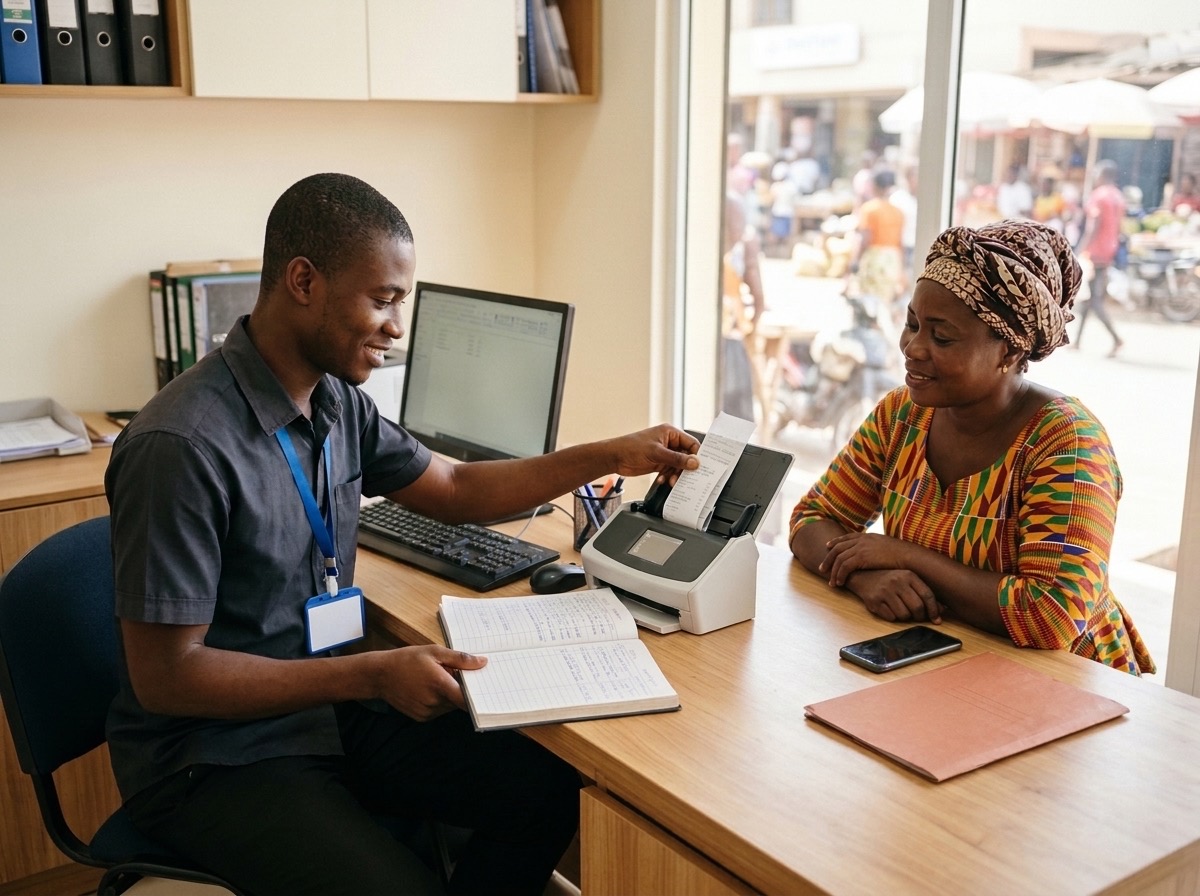
Illustrative scenario · Hajia Fati Abdulai, Adom Shea & Agro Ltd
Illustrative walkthrough: Adom Shea
- Before In this illustrative scenario, an SME like Adom Shea & Agro Ltd applies to GCB Bank for a GH₵ 250,000 boiler loan but cannot be approved because shea kernel purchases sit in three handwritten market books, personal MoMo transfers are mixed in, and landed collateral is short.
- Kiosk review Under the proposed GCB referral flow, a graduate associate at the kiosk would scan the 38 notebook pages and 1,420 MoMo entries at zero upfront cost, and a KPMG-accredited accountant would remotely sign off on compiled statements showing a 2.14x coverage ratio.
- After Paired with a proposed 60% GIRSAL agribusiness collateral guarantee, GCB Bank could disburse the GH₵ 250,000 facility—deducting a 1.25% compilation fee at payout instead of requiring an upfront GH₵ 24,000+ statutory audit.